

As we approach 2025, a critical question arises: How will the evolving global security landscape impact businesses and governments worldwide?
The world is witnessing a significant shift in geopolitical dynamics, driven by great power competition, rapid technological advancements, and the escalating threat of climate change. These factors are redefining the global security forecast, presenting both challenges and opportunities.
Staying ahead of emerging security threats and understanding geopolitical risk assessments will be crucial for strategic decision-making. This article provides an overview of the key trends to watch, offering insights into the future geopolitical challenges that will shape the world in 2025.
Key Takeaways
Table of Contents
- Understanding the impact of great power competition on global security.
- The role of technological advancements in shaping geopolitical dynamics.
- The growing threat of climate change and its security implications.
- Emerging security threats and risk assessments to watch.
- Strategic security outlook for businesses and governments.
The Evolving Global Security Landscape
As international relations continue to evolve, the global security landscape is becoming increasingly volatile. This shift is driven by a complex interplay of geopolitical, economic, and technological factors that are reshaping the way organizations operate and interact with their environment.
Current Trajectory of International Relations
The current trajectory of international relations is marked by rising tensions between major powers, the proliferation of advanced technologies, and the emergence of new global challenges such as climate change. Geopolitical landscape analysis reveals that these factors are contributing to an increasingly complex and unpredictable security environment. Organizations must navigate this landscape carefully to mitigate potential risks.
Why Organizations Need to Prepare Now
In this evolving security landscape, political risk analysis and national security analysis are crucial for organizations to anticipate and prepare for potential disruptions. By understanding the emerging security threats and assessing their vulnerability, businesses can develop strategies to enhance their resilience and maintain continuity in the face of uncertainty. It’s essential for organizations to be proactive in their strategic planning to navigate the complexities of the evolving security environment.
Key Geopolitical Security Trends 2025
As we approach 2025, the global security landscape is poised to undergo significant changes driven by emerging geopolitical trends. Understanding these trends is crucial for organizations to develop effective strategic defense strategies and geopolitical risk assessments.

Great Power Competition and Regional Conflicts
The intensifying great power competition is expected to continue in 2025, with major powers vying for influence across different regions. This competition will likely lead to increased regional conflicts, making it essential for organizations to monitor geopolitical developments closely.
Technology as a National Security Battleground
Technology will remain a critical battleground in national security in 2025. Advances in areas such as artificial intelligence, cybersecurity, and quantum computing will have significant implications for the strategic security outlook. Organizations must stay abreast of these developments to remain competitive.
Climate Security and Resource Competition
Climate security and resource competition will increasingly influence geopolitical dynamics in 2025. As climate change continues to impact global resources, competition for remaining resources is likely to intensify, potentially leading to new security challenges.
In conclusion, the key geopolitical security trends of 2025 will be shaped by great power competition, technological advancements, and climate-related issues. Organizations must be aware of these trends to develop effective strategies for navigating the complex geopolitical landscape.
How to Assess Your Organization’s Vulnerability
As geopolitical tensions rise, organizations must proactively assess their vulnerabilities to stay ahead of potential threats. This involves a systematic approach to understanding and mitigating risks.
Step 1: Map Your Global Footprint and Dependencies
Mapping your organization’s global footprint and dependencies is crucial. This includes understanding supply chain dynamics and identifying critical geopolitical chokepoints.
Supply Chain Mapping Techniques
Effective supply chain mapping involves visualizing the flow of goods and services. Techniques include using data analytics tools to track and predict potential disruptions.
Identifying Critical Geopolitical Chokepoints
Organizations must identify geopolitical chokepoints that could impact their operations. This includes strategic locations like the Strait of Malacca or the Suez Canal.
Step 2: Quantify Potential Impact of Disruptions
Once vulnerabilities are identified, organizations must quantify the potential impact of disruptions. This involves assessing the financial, operational, and reputational risks associated with geopolitical events.
According to a recent report, “Organizations that proactively assess and mitigate geopolitical risks are better positioned to navigate future security challenges.” By adopting a proactive approach to geopolitical risk assessment, organizations can enhance their resilience and strategic advantage in an increasingly complex global landscape.
Developing an Early Warning Intelligence System
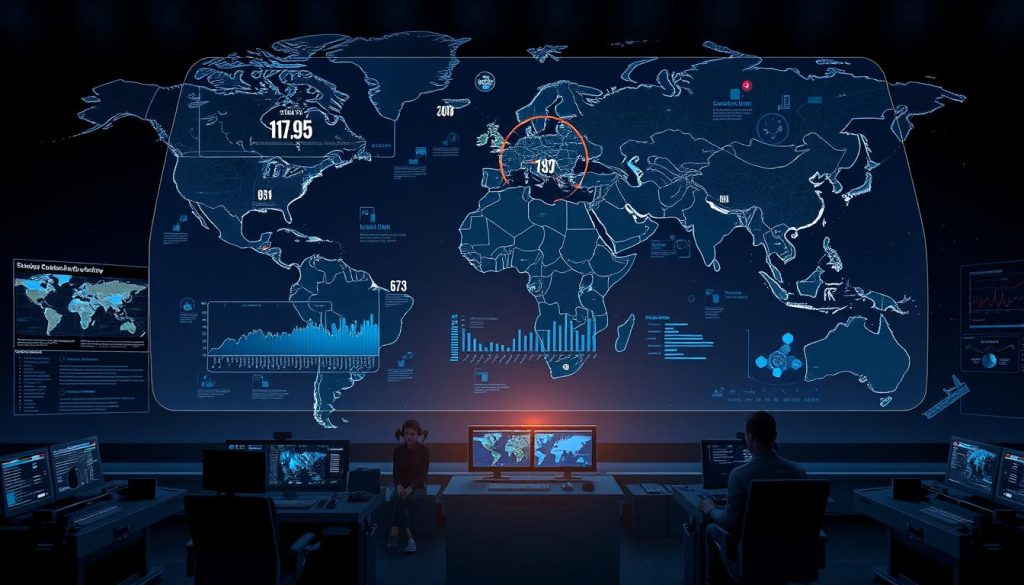
In today’s rapidly changing geopolitical landscape, developing an early warning intelligence system is crucial for organizations to anticipate and respond to emerging security threats. This system enables businesses to stay informed about potential disruptions and make strategic decisions to protect their interests.
Essential Geopolitical Indicators to Monitor
To create an effective early warning system, organizations must monitor essential geopolitical indicators. These include:
Political Stability Metrics
Tracking political stability metrics helps organizations understand the likelihood of regime changes or political unrest that could impact their operations.
Economic Warning Signs
Economic warning signs, such as inflation rates, trade balances, and currency fluctuations, can signal potential economic instability.
Security Situation Indicators
Monitoring security situation indicators like terrorist activity, crime rates, and military movements is crucial for assessing the safety of personnel and assets.
Building Your Intelligence Collection Framework
Building an intelligence collection framework involves integrating data from various sources, including open-source intelligence, human intelligence, and geospatial intelligence. This framework should be designed to provide real-time insights into emerging security threats, enabling organizations to respond proactively to changes in the geopolitical landscape.
By focusing on strategic security outlook and national security trends, organizations can develop a comprehensive early warning system that supports their strategic objectives and enhances their resilience to geopolitical disruptions.
Creating Resilient Strategies for Different Scenarios
In the face of uncertainty, organizations must prioritize the development of resilient strategies to thrive in diverse scenarios. This involves a comprehensive geopolitical risk assessment to identify potential disruptions and opportunities. By understanding the complexities of future geopolitical challenges, businesses can craft strategic defense strategies that enhance their ability to adapt.
Diversification vs. Concentration Approaches
One key aspect of building resilience is deciding between diversification and concentration approaches. Diversification can reduce dependence on a single market or supplier, thereby mitigating risk. Conversely, concentration can lead to efficiency and specialization. Organizations must weigh these factors based on their specific circumstances and risk tolerance.
Balancing Just-in-Time with Just-in-Case
Inventory management is another critical area where businesses must strike a balance. The just-in-time approach can optimize efficiency and reduce costs, but it leaves little room for error. In contrast, a just-in-case strategy involves maintaining larger inventories to buffer against potential disruptions. The key is finding a balance that aligns with the organization’s risk assessment and operational needs.
Strategic Partnerships in Uncertain Times
Forming strategic partnerships can provide organizations with additional resilience. By collaborating with other businesses or entities, companies can share risks, leverage each other’s strengths, and improve their ability to navigate international security developments. These partnerships can be a valuable component of a comprehensive resilience strategy.
Implementing Practical Security Measures
As we navigate the complex geopolitical landscape of 2025, implementing practical security measures becomes crucial for organizational resilience. The emerging security threats anticipated in the next few years demand a proactive and multi-faceted approach to security.
To effectively counter these threats, organizations must focus on both physical and digital security enhancements. This includes assessing current vulnerabilities and implementing targeted measures to mitigate risks.
Physical Security Enhancements for 2025 Threats
Physical security enhancements are critical in addressing the new and evolving threats of 2025. This involves upgrading security infrastructure such as surveillance systems, access controls, and perimeter security. Organizations should also invest in training security personnel to respond effectively to potential threats.
Digital and Cyber Resilience Strategies
In addition to physical security, developing robust digital and cyber resilience strategies is essential. This includes implementing advanced cybersecurity measures such as AI-driven threat detection, regular software updates, and employee training on cyber hygiene. By leveraging insights from national security analysis and staying informed about geopolitical security trends 2025, organizations can better anticipate and prepare for potential cyber threats.

Conclusion: Turning Geopolitical Awareness into Strategic Advantage
Understanding and preparing for geopolitical security trends in 2025 is crucial for organizations seeking to navigate the complexities of the global security environment. By integrating insights from geopolitical landscape analysis into their strategic planning, businesses can enhance their resilience and competitiveness.
Staying abreast of future security challenges and aligning with national security trends enables organizations to mitigate risks and capitalize on opportunities arising from the evolving geopolitical landscape. This proactive approach ultimately strengthens their strategic security outlook.
As organizations move forward, prioritizing geopolitical awareness and adapting to the changing global security landscape will be key to achieving long-term success. By doing so, businesses can ensure they remain competitive and secure in an increasingly complex world.